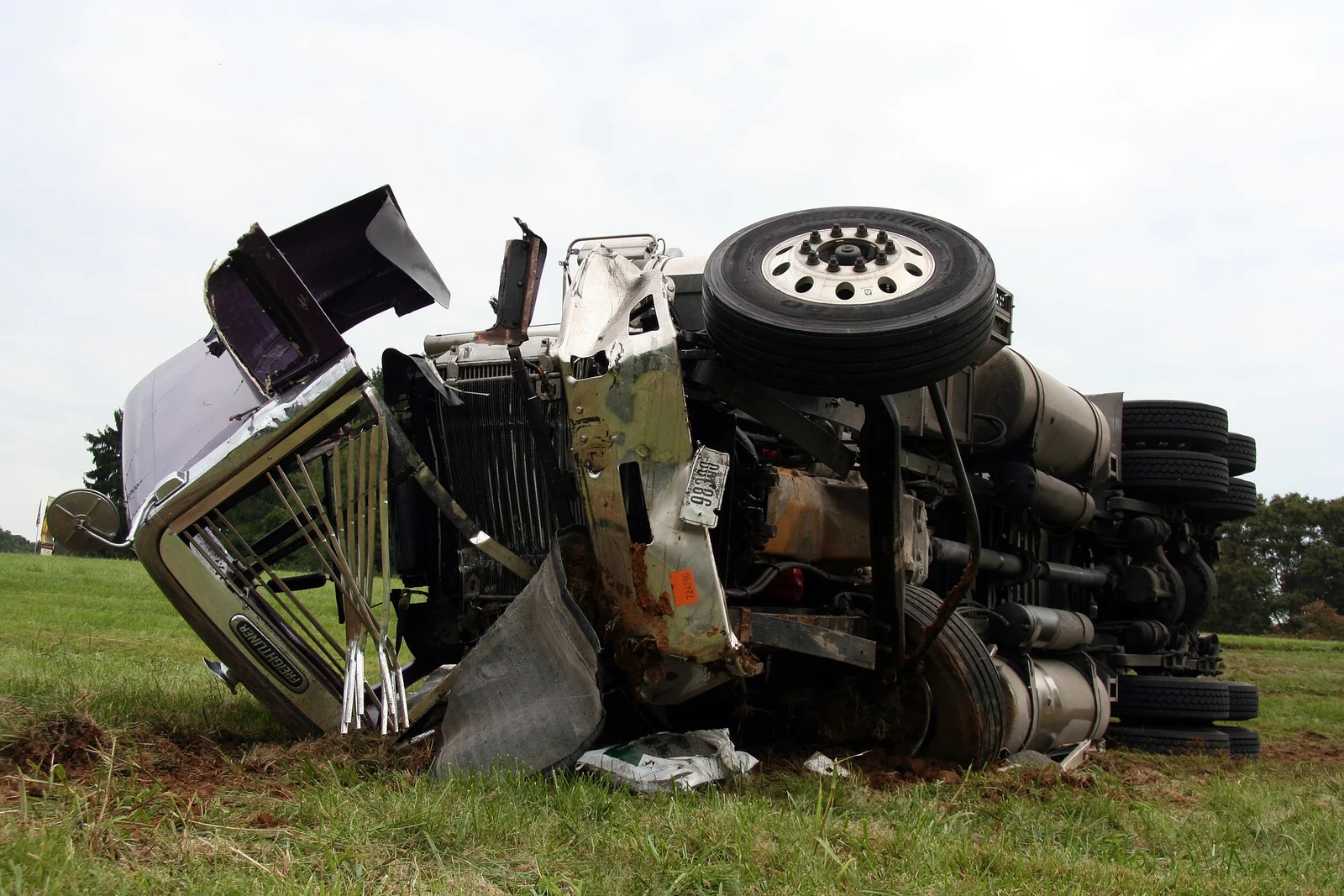
Why Truck Accident Claims Are Different: Liability, Evidence & Federal Rules Explained
A truck accident isn’t the same thing as a bumper ding with another vehicle. Trucks are larger. Injuries are more severe. And the ensuing claim is an entirely different ballgame. In 2024 alone, 5,340 people…
Matt Johnson · Lawyer Monthly
Legal information for general reading, not advice for your situation. Jurisdictions and publication dates vary; consult the original source.

Been hit by a big rig?
A truck accident isn’t the same thing as a bumper ding with another vehicle. Trucks are larger. Injuries are more severe. And the ensuing claim is an entirely different ballgame. In 2024 alone, 5,340 people were killed in large truck crashes.
Here's the problem:
Most individuals file a truck claim like any other car claim. They call their insurer, submit some photos and wait. BIG ERROR.
Truck claims have :
- More people to blame
- More evidence to protect
- More federal rules to follow
Get any one of those wrong and your claim can fall apart.
Here is what makes them so different...
Inside this guide:
- Why Truck Accident Claims Need A Different Approach
- Who Is Liable In A Truck Crash?
- The Evidence That Wins Truck Claims
- The Federal Rules Truckers Must Follow
Why Truck Accident Claims Need A Different Approach
A fully loaded semi can weigh up to 80,000 lbs. That's 20 times heavier than the average automobile.
If a truck and a car crash, the car always comes out losing. That's evidenced by the fact that 70.4% of those killed in large truck accidents were in the other vehicle.
Serious injuries lead to bigger medical bills, longer work absences, and a larger overall claim. And big claims attract big law firms. Trucking companies have attorneys and their own insurance investigators. Some even send a representative to the crash scene within hours.
Their job? To protect the company. Not you.
Here are a few reasons to retain a truck accident lawyer as soon as possible. They will know the roads, courts and trucking routes in your area. If your accident occurred on I-40 or I-55, a Memphis truck accident attorney will already know how congested those freight corridors can be and how aggressive trucking companies tend to be with claims from that area. The sooner you have someone in your corner, the sooner they can preserve evidence.
Who Is Liable In A Truck Crash?
In a car crash, there is usually one driver to blame. Simple.
In a truck crash... It's rarely that simple.
Several parties could share the blame for one crash.
Each party may have their own insurance policy. This is important because truck wreck damages can reach astronomical levels and one policy may not pay for all damages. The most common policies are:
- The truck driver: Speeding, texting, driving tired or ignoring safety rules.
- The trucking company: Hiring unsafe drivers. Cutting corners on training or encouraging drivers to exceed their time limits.
- The cargo loader: Loading freight unevenly so your truck tips or your cargo shifts on a turn.
- The maintenance company: Doing poor repairs on brakes, tyres, or lights.
- The parts maker: Selling a faulty part that failed on the road.
Most trucking companies are liable for their drivers' actions. Some try to skirt this by labelling the driver as an " independent contractor. "
Don't let that fool you.
Federal regulations often hold the business leasing the truck liable. Determining actual fault requires investigation. And an investigation begins with evidence.
The Evidence That Wins Truck Claims
Here's something most people don't know...
Trucks log nearly everything. Speed. Braking. Hours of service. Even the millisecond that driver slammed on the brakes.
The catch? A lot of this data doesn't stick around for long.
The Truck's "Black Box"
Most big rigs have an engine control module (ECM). Also known as a truck's black box, it stores information on:
- Speed before the crash
- When the brakes were applied
- Throttle and cruise control use
Some of this information can be overwritten in a few weeks if the truck returns to service. If deleted, it's gone forever.
Driver Logs & ELD Data
Truck drivers need to record their hours of service. Most drivers do this through an electronic logging device, or ELD. This information can show whether the driver drove for excessive periods without rest. Carriers only need to retain these records for 6 months.
Company Records
The trucking company also has piles of paperwork. Things like the driver's hiring packet, drug test paperwork, training records and repair logs.
Logs can reveal a trend. Perhaps the driver had previous infractions. Perhaps the brakes were long overdue for maintenance. Perhaps the company knew and turned a blind eye.
This is where cases are won.
To prevent this evidence from disappearing, your attorney can issue a "spoliation letter." It officially notifies the company to preserve all records associated with the accident. Once they receive this letter, destroying evidence can get the company in serious legal jeopardy.
The Federal Rules Truckers Must Follow
Cars abide by their state's traffic laws. Trucks do that as well... and follow an even thicker rulebook from the FMCSA.
Rules are GOLD when it comes to your claim. If a driver or company violated one, it could be used as evidence they were negligent. Here are some of the major ones.
Hours Of Service Rules
Tired truckers are dangerous truckers. So the FMCSA limits how long they can drive:
- A max of 11 hours of driving after 10 hours off duty
- No driving after the 14th hour on duty
- A 30-minute break after 8 hours of driving
Logs that break these limits can point straight to driver fatigue.
Drug & Alcohol Testing
Truck drivers are heavily tested for drug and alcohol use. They must be tested before being hired and randomly, and after several accidents. A commercial driver has an alcohol limit of 0.04%. That is only half the limit of most non-commercial drivers.
Maintenance & Inspection Rules
Trucks require frequent inspections and maintenance. Each driver should also inspect their truck before and after every trip. Failing to inspect or delaying repairs is negligence in its most blatant form.
Insurance Minimums
Federal law mandates that most trucking companies carry a minimum of $750,000 in liability insurance. Certain carriers must carry much higher limits depending on their cargo.
That's great news for you. It means serious injuries are frequently covered. Insurers won't just give you that money though.
The Bottom Line
Truck accident claims are a different beast. They have:
- More parties who could be liable
- Evidence that can disappear fast
- Federal rules that set a higher bar for drivers and companies
The good news? Those differences can also help you. Records, rules and extra insurance can build you a rock-solid claim.
Speed is essential. See a doctor, save every piece of paperwork and consult a truck accident lawyer before the trucking company's lawyers get too far ahead of you.
Strike while the iron is hot. Preserve the evidence. And remember…the federal rules can work for you too.
https://images.pexels.com/photos/24343234/pexels-photo-24343234. jepeg
Source & rights
Original article: Lawyer Monthly. Original language and source publication date retained.
Article and image rights remain with their original rights holders. This site does not grant blanket reuse permission or claim this source reporting as its own.